
McKinley County Arrest Records and Charges
Arrest records in McKinley County document the law-enforcement event: the agency involved, the person taken into custody or cited, the report or citation trail, and any booking record held by the detention center. Those records do not prove guilt. They also do not always show what the prosecutor later files in court. Court charge records begin when the accusation is placed in the court system through a complaint, citation, criminal information, or indictment. That filed charge can be seen in New Mexico court systems when the case is public and entered into the court database.
The McKinley County Sheriff's Office page identifies Sheriff James Maiorano III, the county office, and the public divisions that support law-enforcement records. 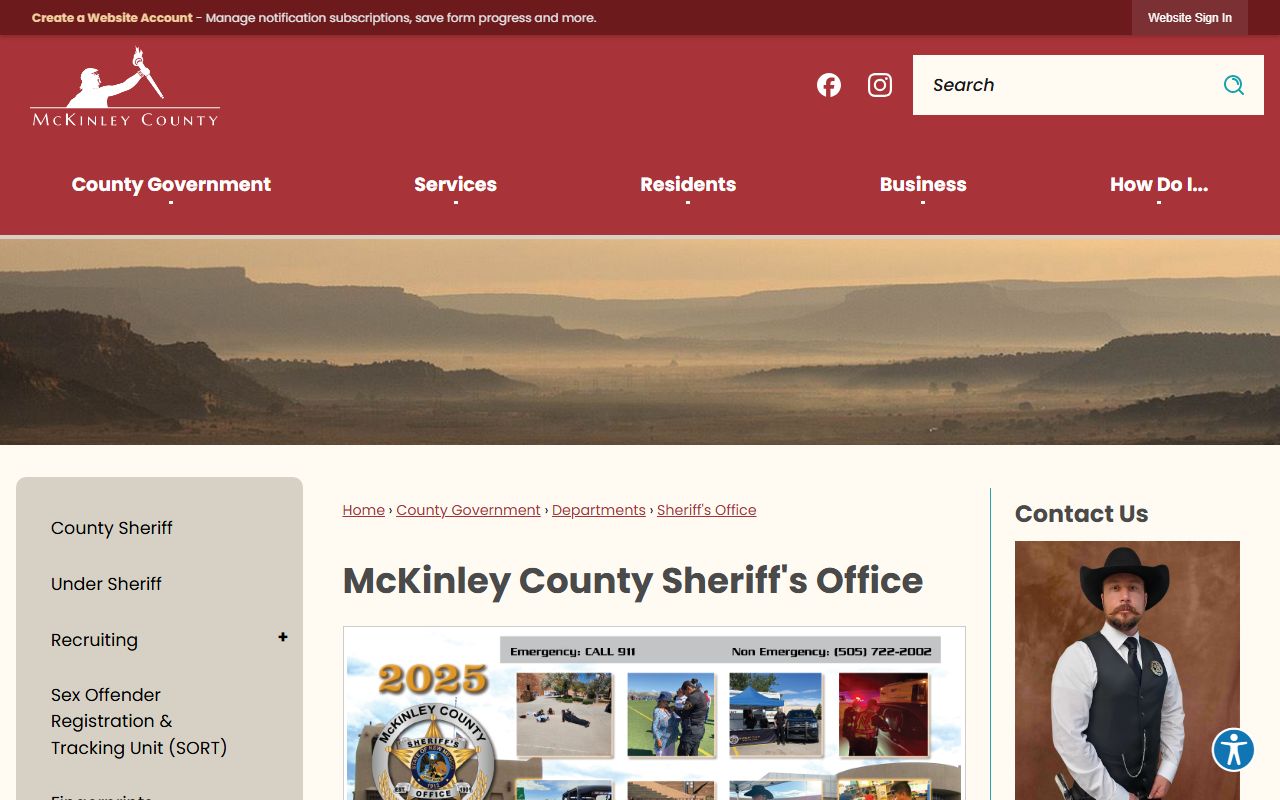 That office context matters because a sheriff report, jail booking record, and court charge record may all refer to the same arrest but live with different custodians.
For custody and booking status, the McKinley County Adult Detention Center must be treated apart from the court file. The county research found no official county-hosted public jail roster, so current custody is checked through the detention main line, New Mexico VINE when available, and later court filings. The full criminal case file, including plea, disposition, and sentence, belongs with the McKinley County criminal court records.
Charges Filed After a McKinley County Arrest
The Eleventh Judicial District Attorney, Division II, serves McKinley County. That office decides many formal criminal filings after an arrest, especially felony matters routed to District Court. The current district attorney is John Bernitz. The office address is 201 West Hill Ave., Suite 100, Gallup, NM 87301, and the telephone number is 505-722-2281. Magistrate Court can receive misdemeanors, DWI, traffic offenses, and felony preliminary matters. Gallup Municipal Court handles city traffic citations, city arrests, code enforcement, animal-control violations, petty misdemeanors, and city DWI or municipal charges.
The Eleventh Judicial District Attorney Division II listing is the official local DA contact point for McKinley County prosecution questions. 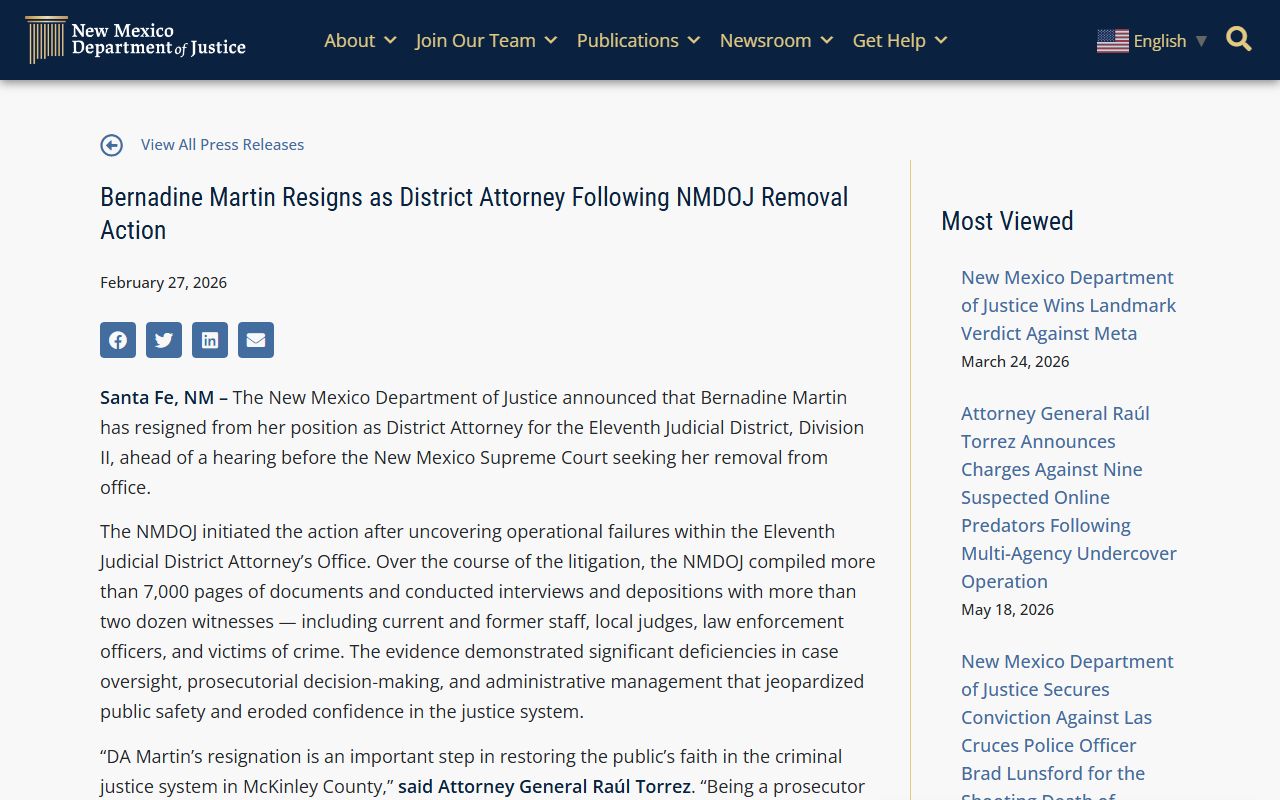 A DA contact does not replace the court docket, but it helps identify which prosecuting office is tied to formal charges after arrest.
The charging paper is important because it states what the court is being asked to act on. One arrest can lead to no filed case, one charge, or several charges. A charge may also change after review. New Mexico public court systems may show the case number, court location, case category, party name, filing date, docket events, warrants, financial entries, and the case status, but legacy Case Lookup does not provide document images.
| Charging document | Used for | Where it appears | McKinley County context |
|---|---|---|---|
| Complaint | A civil filing or criminal accusation that can start a case. | District, Magistrate, or Municipal Court docket. | May be tied to misdemeanor, municipal, traffic, or early felony proceedings. |
| Information | A prosecutor's formal felony charging document. | District Court criminal case file. | Common after DA review in Eleventh Judicial District matters. |
| Indictment | A grand-jury charging document. | District Court criminal case file. | Used for serious felony matters when a grand jury returns charges. |
Search McKinley County Arrest Records
Charge records after arrest are searched first through New Mexico Case Lookup, Odyssey Public Access, and re:SearchNM when documents or registered access are needed. Case Lookup covers New Mexico Supreme Court, Court of Appeals, District Court, Magistrate Court, and Municipal Court data, with stated limits. District and Magistrate case information is updated daily and current within 24 hours of entry. Older cases filed before statewide automation in June 1997 may require a direct call to the court.
The McKinley County Sheriff's Records Division page describes report requests for incident reports, accident reports, traffic citations, and IPRA records. 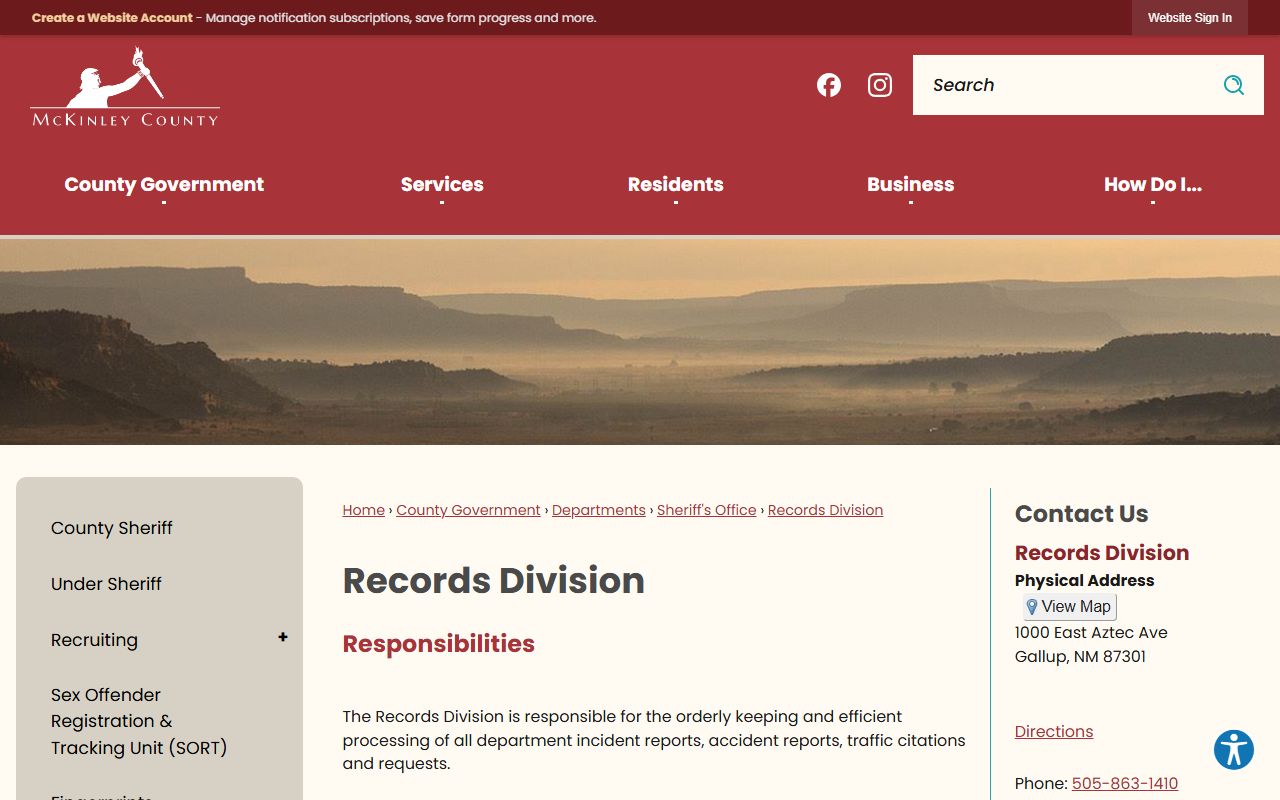 That request path is useful when the court charge record exists but the underlying arrest report or citation detail is not in the court search result.
- Open New Mexico Case Lookup and accept the disclaimer for individual electronic court record viewing.
- Search by party name in Last First Middle format, or use the court and case-number components if the case number is known.
- Use McKinley-related location codes when narrowing a search: 1113 Gallup District, 35 Gallup Magistrate, 36 Thoreau Magistrate, or 102 Gallup Municipal.
- Read the charge line, case category, court, filing date, docket entries, warrants, financial entries, and current status before treating a charge as final.
- If a document image or full pleading is needed, use re:SearchNM if eligible or request the record from the court custodian.
| Search field | Type | Use for charge records | Format note |
|---|---|---|---|
| Name | Text | Find defendant or party records. | Maximum 35 characters; shown as Last First Middle. |
| Date of Birth | Date | Narrow common-name searches. | Use mm/dd/yyyy when known. |
| Court Type | Dropdown | Limit to District, Magistrate, or Municipal Court. | D, M, T, or U court types appear in the form. |
| Court Location | Dropdown | Limit to Gallup District, Gallup Magistrate, Thoreau Magistrate, or Gallup Municipal. | Location list is populated by court type. |
| Case Category | Text | Limit to criminal, traffic, or civil category codes. | Two-character codes such as CR, TR, or CV. |
| Filing or Hearing Date | Date range | Find recent filings after an arrest or citation. | Choose filing date or hearing date before entering the range. |
Gallup Municipal Court also announced an official public access portal at mcourtsgallupnm.com for eligible municipal court records. The visible instructions support party-name searches, citation searches using the full complaint or citation number, and criminal case searches by court-assigned number.
McKinley County Police Arrest Records
Law-enforcement records are requested from the agency that created or holds them. The Sheriff's Records Division says staff keep and process incident reports, accident reports, traffic citations, and public requests. Requests may be made by calling 505-863-1410, using the page email link, faxing 505-722-9317, or mailing a request to 300 B West Nizhoni Boulevard, Gallup, NM 87301. The sheriff contact page also lists 1000 East Aztec Ave., Gallup, NM 87301, with lobby hours Monday through Friday, 8:00 a.m. to 5:00 p.m.
The Gallup Police Department page is the city contact source for Gallup police records and public safety contacts.  City police records can be separate from county sheriff records even when the later court charge appears in the same New Mexico court systems.
The McKinley County Sheriff's Civil Division page names court security, civil processes, and prisoner transports among the division functions.  That transport role explains why warrant or custody events can appear in law-enforcement files while the charge details remain in the court record.
| Record path | Use it for | Contact or source |
|---|---|---|
| Sheriff Records Division | Incident reports, accident reports, traffic citations, and IPRA requests. | 505-863-1410; fax 505-722-9317. |
| Gallup Police Department | City police contact and records email route for Gallup matters. | Gallup Police official department page. |
| District or Magistrate Court | Filed charges, hearings, docket events, dispositions, and sentencing records. | Case Lookup, Public Access, re:SearchNM, or court clerk. |
| Adult Detention Center | Current county custody when no public jail roster is available. | Main line 505-979-7224. |
McKinley County Charge Status
A filed charge is not fixed for the life of the case. A complaint can be amended. A felony can move from preliminary proceedings to District Court. A charge can be dismissed, reduced as part of a plea, or resolved by trial. Court records may show docket events, orders, plea paperwork, sentencing orders, probation terms, warrants, payment compliance, and financial entries. The status line should be read with the docket, not in isolation.
| Status | What it means in a court charge record |
|---|---|
| Pending | The charge is still active and no final outcome has been entered for that charge. |
| Amended | The filed accusation changed, often by count, wording, statute, or severity level. |
| Reduced | The charge was lowered to a lesser offense, often through plea or prosecutor action. |
| Dismissed with prejudice | The charge was dismissed and generally cannot be refiled. |
| Dismissed without prejudice | The charge was dismissed but may be refiled if legally allowed. |
| Disposition entered | The court has recorded the final outcome, such as plea, verdict, dismissal, or sentence. |
Note: Legacy Case Lookup does not show document images, so the docket may need to be paired with a court document request.
McKinley County Charge Records vs Convictions
Being charged is not the same as being convicted. A charge is an accusation filed in a court case. A conviction requires a guilty plea, no contest plea accepted by the court, verdict, or other final finding that leads to judgment and sentence. Public court systems may show both the charge and later disposition, but the reader must check the final outcome before describing the record.
| Point of comparison | Charge | Conviction |
|---|---|---|
| Stage | Accusation after arrest, citation, or prosecutor filing. | Final result after plea, verdict, or court finding. |
| Where it appears | Complaint, information, indictment, citation, docket, or case summary. | Disposition, judgment, sentencing order, probation terms, or docket event. |
| Meaning | States what the person was accused of. | States what the court finally found or accepted. |
| Risk of error | May be amended, reduced, dismissed, or superseded. | May still need review for appeal, expungement, or later correction. |
Important: Do not treat a McKinley County charge as a conviction without checking the final disposition and sentence entry.
Restricted McKinley County Arrest Records
New Mexico public access rules allow broad inspection of public records, but they also protect certain information. NMSA 1978 Section 14-2-1 states the public right to inspect records unless an exception applies. Section 14-2-1.1 allows protected personal identifiers to be redacted. Court records are generally public under Rule 1-079 NMRA unless sealed by order or otherwise protected.
The McKinley County notice on the renovated sheriff facility provides local law-enforcement facility context tied to sheriff operations.  Facility changes do not alter access rules, but they help identify the local office connected to sheriff records.
Juvenile criminal cases have not been displayed on Case Lookup since July 1, 2007. Family Violence Protection Act order-of-protection cases have not been displayed since July 1, 2008. re:SearchNM places Children's Court delinquency in a restricted tier and treats abuse and neglect, adoption, mental health, and similar categories as strict-confidentiality matters. A person seeking expungement usually petitions the court; the sheriff, clerk, or public search system does not erase an arrest or charge informally.
| Record action | What changes | Research basis |
|---|---|---|
| Redaction | Protected identifiers are removed while nonexempt parts may remain open. | NMSA 14-2-1.1 and IPRA process rules. |
| Sealing | The court record is hidden from ordinary public access by rule, statute, or order. | Rule 1-079 NMRA. |
| Expungement after release without conviction | Qualifying criminal and related public records may be removed from general public access. | Criminal Record Expungement Act, Section 29-3A-4. |
| Expungement of conviction records | Qualifying conviction records may be removed if statutory findings are met. | Criminal Record Expungement Act, Section 29-3A-5. |
Note: A court order should be served on every agency that maintains the record, including court, sheriff, and state records custodians where applicable.